What Does 2700K Lighting Look Like? A Visual Guide

What Does 2700K Lighting Look Like? A Visual Guide
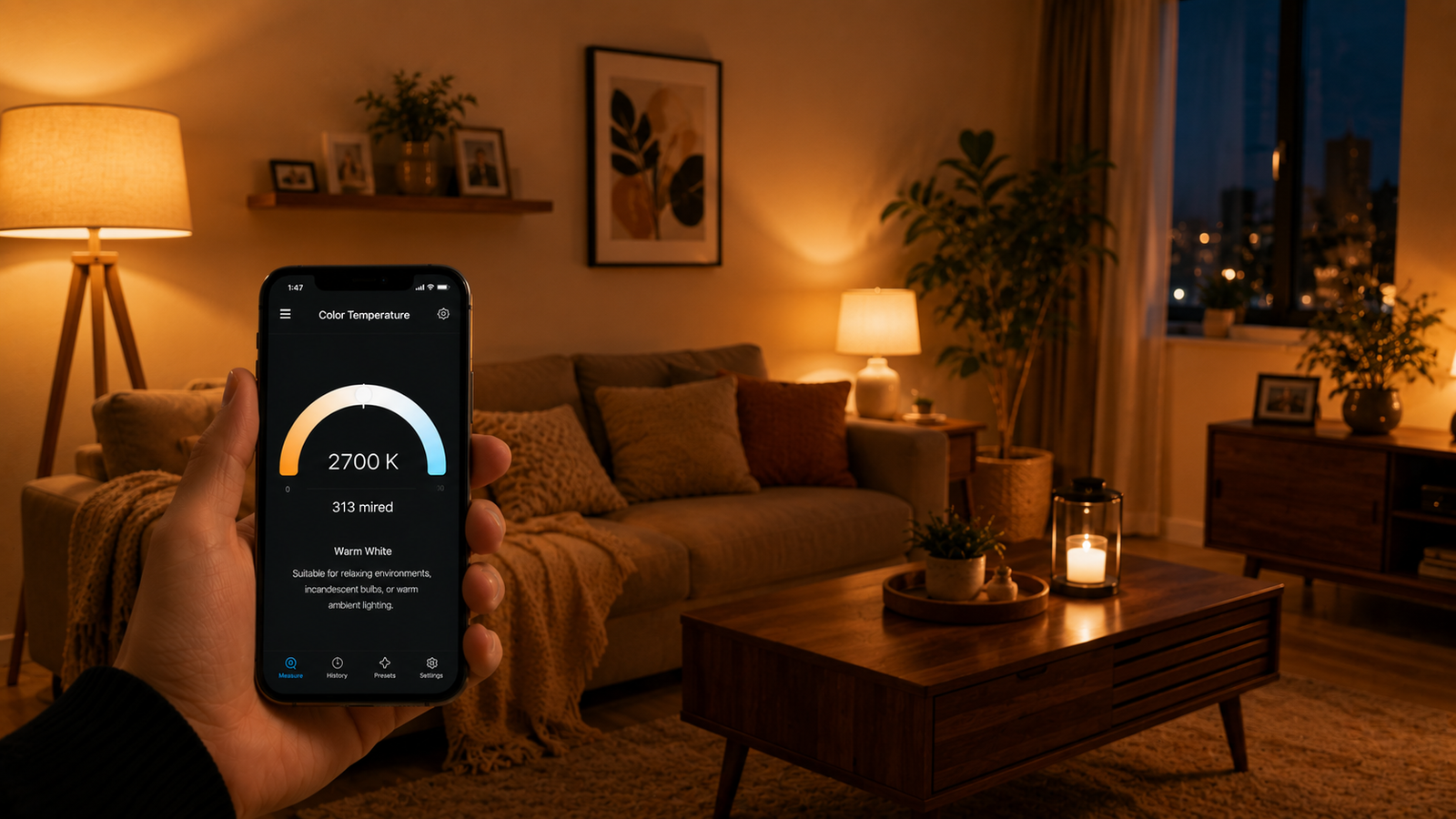
If you've seen “2700K” on a bulb box and wondered what that light actually looks like in a room, here's the short version: 2700K is a soft, warm, golden-white glow — the same cozy, slightly amber light you get from a traditional incandescent bulb. It's the color of a relaxing living room in the evening, a restaurant at dinner, or a warm hotel lobby.
This guide describes exactly what 2700K looks and feels like, what real-world sources it resembles, how it renders the colors in your room, and where it works best. If you want to see whether a bulb you already have is 2700K, you can measure its color temperature with your phone.
📲 See if your bulb is really 2700K
Kelvin Light Scale reads any light's color temperature from your iPhone — confirm a warm glow is truly 2700K and match the rest of your bulbs to it.
What 2700K looks like in one sentence
2700K is a warm white with a gentle golden or amber cast — clearly “white” light, but tinted just enough toward yellow-orange to feel soft and inviting rather than crisp or clinical. It's not as deeply orange as candlelight, and nowhere near the blue-white of daylight; it sits comfortably at the cozy end of the everyday lighting range. To see precisely where a bulb falls, you can take a reading.
Where 2700K sits on the Kelvin scale
Color temperature runs from warm (low Kelvin) to cool (high Kelvin). 2700K is near the warm end of common home lighting. For context:
| Temperature | Appearance |
|---|---|
| 1,800K | Deep amber (candlelight) |
| 2,700K | Warm golden white (this one) |
| 3,000K | Slightly cleaner warm white |
| 4,000K | Neutral white |
| 5,000K+ | Cool blue-white (daylight) |
What it resembles in the real world
The easiest way to picture 2700K is through things you already know. It's essentially the color of a classic incandescent light bulb — the warm glow most people grew up with before LEDs. You also see it in the soft lighting of a cozy café in the evening, the lamps in a comfortable den, and the warm pools of light in a boutique hotel. If a space feels relaxed, intimate, and a little golden, it's almost certainly lit somewhere around this temperature. You can measure a favorite warm room and you'll likely find it close to 2700K.
How it feels: the mood of 2700K
Color temperature shapes mood, and 2700K is firmly in “wind down and relax” territory. Warm light like this is associated with comfort, calm, and the end of the day — which is exactly why it suits living rooms and bedrooms. It's the opposite of the alert, energizing feel of cool daylight bulbs. If you want a room to feel like a place to unwind rather than a place to work, 2700K delivers that mood.
How 2700K renders colors
Warm light emphasizes warm colors and softens cool ones. Under 2700K, wood tones, terracotta, reds, and warm neutrals look rich and inviting, and skin tones appear flattering and healthy. The trade-off is that cool colors — bright whites, blues, and grays — can look slightly muted or yellowed compared to how they'd appear under daylight. For a living space full of warm materials this is a feature, not a flaw. If color accuracy is critical (say, for detailed tasks), a cooler temperature serves better, and you can compare temperatures to decide.
Where to use 2700K
- Living rooms: Creates a relaxed, welcoming atmosphere for unwinding and socializing.
- Bedrooms: The warm tone supports a calm, restful mood and gentle evening light.
- Dining rooms: Flatters food and faces, and sets an intimate mood for meals.
- Hospitality-style spaces: Lobbies, lounges, and reading corners where comfort is the goal.
It's less ideal for kitchens, bathrooms, garages, and offices, where a neutral or cool white gives better task visibility. To keep a room consistent, you can check that every bulb matches.
💡 Pro tip
Your eyes adapt to color temperature within minutes, so a 2700K room can start to look “neutral” after you've been in it a while. The warmth is most obvious the moment you walk in, or when you compare it directly to a cooler bulb nearby.
How to know if a bulb is 2700K
Check the box or bulb base for “2700K,” or the label term “soft white,” which usually corresponds to it. If a bulb is unlabeled or already installed, the only sure way to know is to measure: shine it on white paper and read the color temperature with a phone app. That tells you whether a warm-looking bulb is genuinely 2700K or actually a slightly different temperature — useful when matching. You can identify any bulb this way.
✅ The verdict
2700K is a warm, golden-white glow — cozy, relaxing, and almost identical to a traditional incandescent bulb. It flatters warm tones and skin, sets a calm mood, and is the go-to temperature for living rooms, bedrooms, and dining spaces.
Now that you can picture it — soft, golden, and inviting — you'll recognize 2700K the moment you see it. If you want to confirm a bulb is truly this temperature or match new ones to an existing warm glow, just measure it.
Confirm and match your warm lighting
Kelvin Light Scale reads color temperature, lux, and exposure from your iPhone — verify a glow is truly 2700K and keep every room consistent. Free to start, with pro tools when you need them.
Frequently asked questions
What color is 2700K light?
2700K is a warm white with a soft golden or amber tint. It's clearly white light, but warm enough to feel cozy and inviting — essentially the color of a traditional incandescent bulb, not as orange as candlelight nor as blue as daylight.
Is 2700K warm or cool?
2700K is warm. On the Kelvin scale, lower numbers are warmer, and 2700K sits near the warm end of common home lighting, producing a relaxing golden glow rather than a crisp, cool white.
Is 2700K the same as soft white?
Usually, yes. Bulbs labeled “soft white” are most often 2700K, though some makers use the term loosely. To be certain, check for the Kelvin number on the box or measure the bulb with a color-temperature app.
Is 2700K good for a living room?
Yes. 2700K is one of the most popular choices for living rooms because its warm, golden tone creates a relaxed, welcoming atmosphere and flatters warm furnishings and skin tones.
Does 2700K look yellow?
It has a gentle golden-yellow warmth, but it doesn't look strongly yellow on its own — your eyes read it as a warm white. The yellow tint becomes most noticeable when it's placed directly next to a cooler, whiter light.
What's the difference between 2700K and daylight bulbs?
2700K is warm and golden, while daylight bulbs (5000–6500K) are cool and blue-white. 2700K suits relaxing spaces; daylight suits task areas where crisp visibility and color accuracy matter most.
what does 2700k look like2700k light coloris 2700k warm or cool2700k vs soft white2700k living roomwarm white color temperature2700k appearance2700k golden glow