UPS Delivery Route Planner App: How UPS Routes 2026

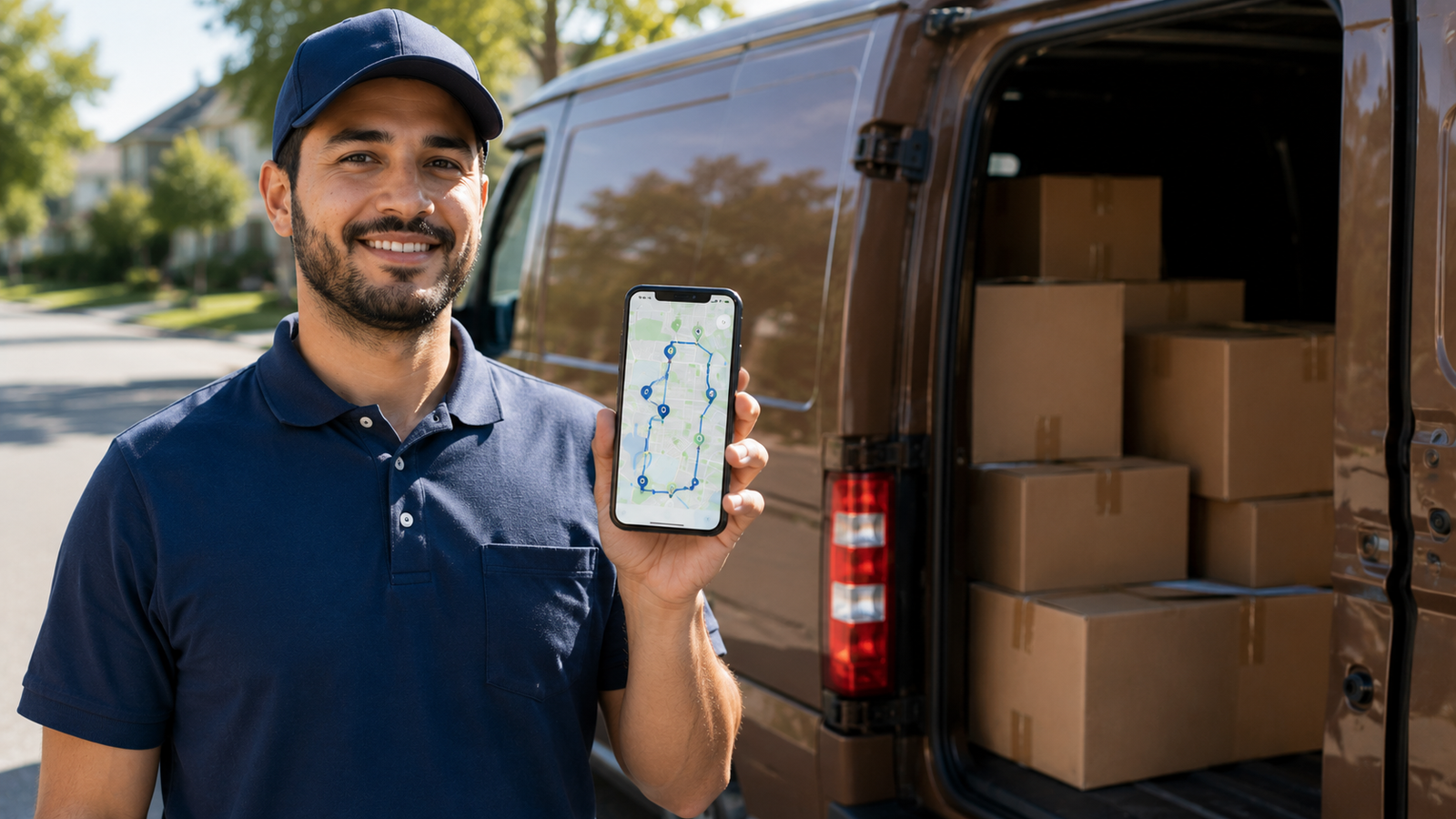
UPS Delivery Route Planner App: How UPS Routes (and How to Do It Yourself) in 2026
UPS runs one of the most famous route optimization systems on earth. It's called ORION, it plans tens of thousands of routes a day, it's so obsessed with efficiency that it famously avoids left turns, and it saves UPS millions of gallons of fuel a year. So it's no surprise people search for a "UPS delivery route planner app" hoping to get that same power for their own deliveries.
Here's the honest reality, and the good news. ORION itself is proprietary — it's UPS-only, and UPS drivers are required to use it on company devices, so you can't simply download it. But the kind of optimization ORION does is absolutely available to independent drivers and small businesses through a standalone route planner. This guide explains how UPS routes its drivers, what you can borrow from its playbook, and how to get ORION-style optimization for your own multi-stop routes. Current for 2026.
ORION-style routing, for the rest of us
Delivery Route Planner brings smart multi-stop optimization to independent drivers and small businesses. Scan or enter your stops, optimize for shortest time or distance, and navigate with Apple Maps, Google Maps, or Waze.
What is UPS ORION?
ORION stands for On-Road Integrated Optimization and Navigation. UPS rolled it out broadly in 2013 across thousands of routes, built on an algorithm so detailed it reportedly runs to around a thousand pages. At its core, ORION solves a version of the classic "traveling salesman problem" — finding the most efficient order to visit dozens of stops — and it does so in seconds.
The current generation, ORION 3.0, added dynamic optimization: instead of just calculating a fixed route overnight, it continuously re-evaluates the remaining stops using real-time traffic and delivery commitment windows, reshuffling the rest of a driver's day on the fly when a road closes or traffic spikes. Drivers see it all through UPSNav on their handheld DIAD device. It's genuinely world-class — and the principles behind it are ones you can apply to your own routes with a good route planner.
Why you can't just "use ORION"
ORION is built by UPS, for UPS. It's wired into the company's package data, its DIAD devices, and its delivery network — it isn't sold as an app you can install. And because UPS package car drivers are employees who must follow company routing on company equipment, ORION isn't something an individual driver swaps out for a personal tool on the clock.
If you're a UPS driver, follow your DIAD and ORION as required — this article isn't about overriding that. But if you're an independent courier, owner-operator, or small business doing your own deliveries, you have full freedom to optimize your routes however you like, and that's where a standalone planner shines.
How to get ORION-style optimization for your own routes
You don't need a thousand-page algorithm to get most of the benefit. A modern route planner gives an independent driver the same fundamentals:
- Capture your stops fast. Scan addresses off labels with your phone camera, or import a list by pasting text or loading a CSV.
- Optimize the order. Let the app solve the traveling-salesman problem for your stops — shortest time using live traffic, or shortest distance to save fuel.
- Respect time windows. Anchor any time-sensitive stops first, then build the route around them.
- Navigate cleanly. Open each stop in Apple Maps, Google Maps, or Waze for turn-by-turn directions.
That's the same loop ORION runs — optimize the sequence, then navigate it — scaled down to a single driver and made dead simple. You can try it free on your next run.
What you can borrow from the UPS playbook
Even without ORION, you can steal some of UPS's hard-won routing wisdom:
- Minimize left turns where it makes sense. UPS avoids them because waiting to cross traffic wastes time and fuel and raises crash risk. On your own routes, favoring right turns can genuinely save minutes.
- Optimize, don't guess. UPS abandoned letting drivers freelance the order because it was rarely the most efficient. Let software solve the sequence.
- Keep consistent territories. Familiarity with an area compounds into speed. Optimizing within zones you know beats scattering across the map.
- Plan for commitments first. Time-definite stops drive the skeleton of the route; everything else fills in around them.
Apply those with a planner that optimizes automatically and you're running your routes on the same principles as the big carriers.
UPS ORION vs a personal route planner
| Aspect | UPS ORION | Personal route planner |
|---|---|---|
| Who it's for | UPS employees only | Anyone with their own route |
| Availability | Proprietary, not for sale | Download and go |
| Stop optimization | Advanced (TSP) | Shortest time or distance |
| Navigation | UPSNav on DIAD | Apple, Google, or Waze |
| Setup cost | Billions, company-wide | Free to start |
The point isn't to replace ORION — it's to give everyone else the same kind of edge. For an independent driver or small fleet, a standalone planner closes most of the gap for a tiny fraction of the complexity.
A quick note: A personal route planner is an independent tool, not affiliated with UPS, and it doesn't connect to or replace ORION, UPSNav, or the DIAD. If you're a UPS employee, always follow your company's required systems and procedures. This is for drivers planning their own deliveries.
Route like the big carriers
Scan your stops, optimize the order for time or distance, and navigate with Apple Maps, Google Maps, or Waze. ORION-style efficiency for independent drivers and small businesses — free to start.
Frequently asked questions
Can I download the UPS ORION route planner app?
No. ORION is UPS's proprietary system, built into its package data and DIAD devices, and it isn't available to the public. UPS drivers use it as required on company equipment. Independent drivers and small businesses can get similar multi-stop optimization through a standalone route planner app instead.
What route planner does UPS use?
UPS uses ORION (On-Road Integrated Optimization and Navigation), rolled out broadly in 2013 and now in a dynamic version that re-routes in real time. Drivers navigate with UPSNav on their handheld DIAD device. The system solves the traveling salesman problem to sequence dozens of stops efficiently.
Why does UPS avoid left turns?
Waiting to turn left across oncoming traffic wastes time and fuel and increases crash risk, so ORION penalizes left turns and favors right turns and efficient paths. The policy has saved UPS millions of gallons of fuel. Independent drivers can apply the same idea to shave minutes off their own routes.
What's the best UPS-style route planner for independent drivers?
For an individual driver or small business, the best option is a standalone planner that lets you scan or import stops, optimize for shortest time or distance, and navigate with Apple Maps, Google Maps, or Waze. It delivers ORION-style sequencing without the enterprise complexity or cost.
Can UPS drivers use a third-party route app instead of ORION?
UPS package car drivers are required to use the company's ORION system and DIAD device on the job, so a personal app isn't a substitute there. Third-party route planners are intended for independent drivers and small businesses routing their own deliveries.
How do I optimize my own delivery route like UPS?
Load your stops into a route planner, let it optimize the sequence for time or distance, anchor any time-sensitive stops first, favor efficient turns where practical, and navigate with your preferred maps app. That mirrors the core loop ORION runs, scaled to a single driver.
ups delivery route planner appups orion route optimizationhow does ups route driversups route planner alternativeorion style route optimizationups no left turn policyroute planner for independent driversoptimize delivery route like ups