Treadmill Vibration: Why It Shakes & How to Fix

Treadmill Vibration: Why It Shakes and How to Fix It
A treadmill that shakes, thumps or vibrates underfoot is more than an annoyance — it makes running unpleasant, disturbs the rest of the house, and usually points to something that will get worse if ignored. Most treadmill vibration comes down to a handful of mechanical causes, and nearly all of them are fixable at home once you know which one you have.
This guide walks through why treadmills vibrate, how to measure it, and how to fix each cause. To pin down whether your fix worked, the free Vibration Detector Sensor app reads the vibration level right from your phone.
Find what’s making your treadmill shake
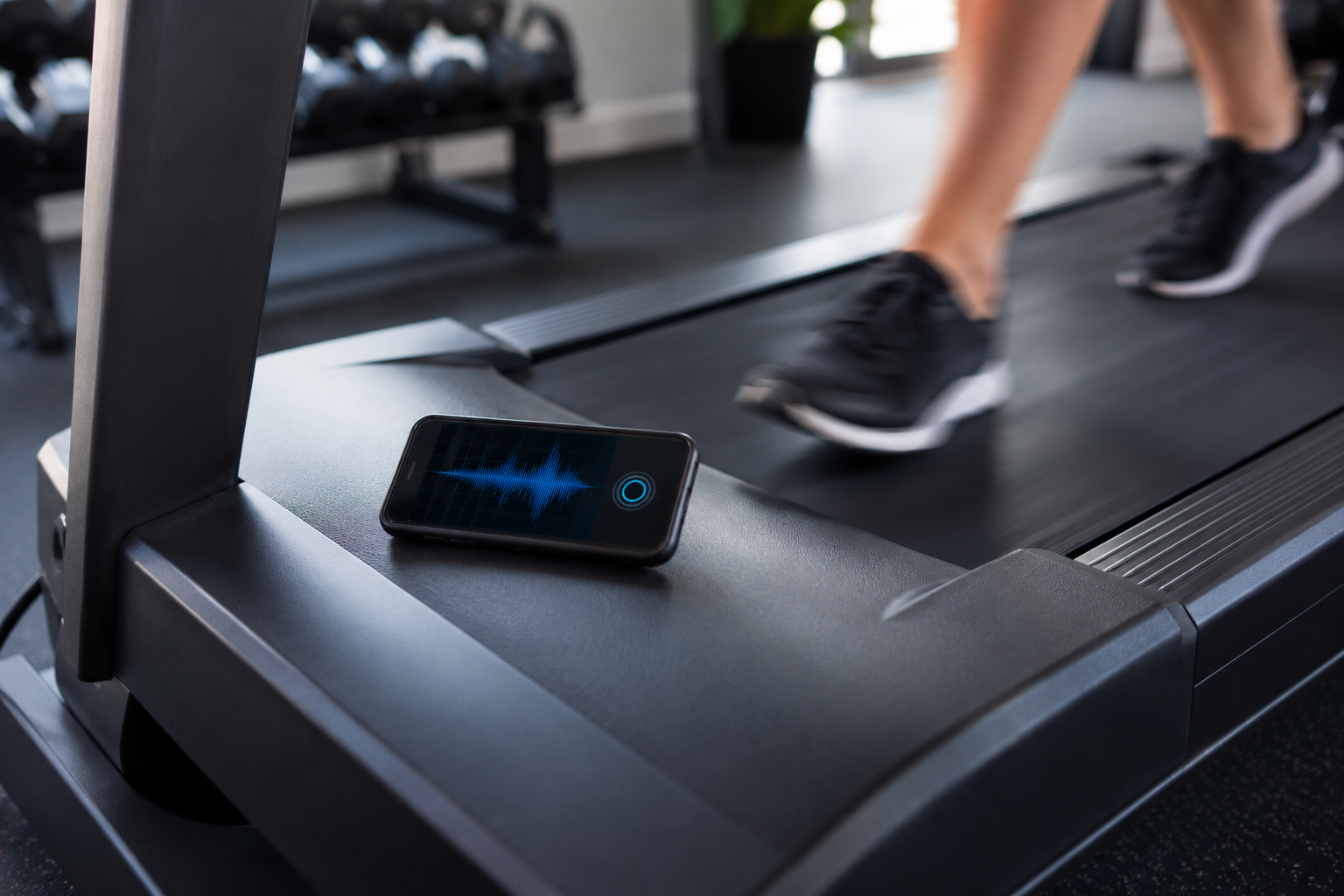
Set your phone on the frame while it runs and read the vibration level — then re-check after each adjustment to see what fixed it.
Why does my treadmill vibrate or shake?
| Cause | Tell-tale sign |
|---|---|
| Not level on the floor | Rocks or wobbles, worse on one side |
| Belt off-center or worn | Uneven feel, belt drifts to one side |
| Worn or dry rollers | Rhythmic thump once per revolution |
| Loose bolts / frame | Rattling, vibration that builds with speed |
| Motor or flywheel imbalance | Vibration even with no one walking |
The most common culprit by far is a treadmill that simply is not level, followed by a belt that has drifted off-center or worn. A quick reading at different speeds with the accelerometer tool helps separate a speed-dependent mechanical issue from a simple leveling problem.
Is treadmill vibration normal?
A small amount of vibration and a low motor hum are normal, especially under a running stride. What is not normal is a persistent shake when the belt runs empty, a rhythmic thump, a rattle that grows with speed, or vibration strong enough to shake the floor. Those indicate a mechanical cause worth chasing down. Measuring the belt running empty with the app isolates the machine’s own vibration from your footfall.
How to measure treadmill vibration
Place your phone flat on the treadmill’s frame or motor cover and run the belt empty at a steady speed. Read the vibration level, then step it up through a few speeds — vibration that rises sharply with speed usually means a balance or roller problem, while a constant level regardless of speed points to leveling or loose hardware. Save the readings so you can compare before and after each fix with the vibration meter.
How to fix treadmill vibration
- Level it first. Adjust the rear leveling feet until the treadmill sits rock-solid with no rocking — this alone solves a surprising share of cases.
- Center and tension the belt. A belt drifting to one side or running too loose causes uneven vibration; adjust the rear roller bolts a quarter-turn at a time.
- Lubricate the belt and deck. A dry deck increases friction and vibration — apply the manufacturer’s recommended silicone lubricant.
- Tighten all hardware. Go around the frame, motor cover and uprights and snug every bolt.
- Add a treadmill mat. A dense mat damps residual vibration and protects the floor.
✓ Pro tip: Change one thing at a time and re-measure. If leveling drops the reading, you’re done; if it doesn’t budge, move on to the belt and rollers. Measuring keeps you from chasing the wrong fix.
Fix the shake for good — free
Live vibration readings across speeds, before/after comparison and logging — diagnose and confirm the fix from your phone.
► Get Vibration Detector Sensor on the App Store | Explore the app →
Note: A phone accelerometer is great for screening treadmill vibration and confirming fixes, but persistent vibration with burning smells, electrical issues or motor noise should be checked by a qualified service technician.
Frequently Asked Questions
Why does my treadmill vibrate so much?
The most common causes are a treadmill that is not level, a belt that has drifted off-center or worn, worn or dry rollers, loose frame bolts, and motor or flywheel imbalance. Leveling and belt issues account for the majority of cases.
Is it normal for a treadmill to shake?
A small amount of vibration and a low hum are normal, especially under a running stride. A persistent shake when the belt runs empty, a rhythmic thump, or a rattle that grows with speed is not normal and indicates a mechanical issue.
How do I stop my treadmill from vibrating?
Level it first, then center and tension the belt, lubricate the deck, tighten all hardware, and add a treadmill mat. Make one change at a time and re-measure so you know which fix actually worked.
Can a vibrating treadmill damage itself or the floor?
Yes, over time excessive vibration loosens hardware, accelerates wear on rollers and bearings, and can transmit noise and stress to the floor. Fixing the cause early and using a mat protects both the machine and your flooring.
Does a treadmill mat reduce vibration?
A dense treadmill mat damps residual vibration and reduces noise transmission to the floor, and it helps keep the machine from creeping. It is a good final step, but it should be used after fixing the mechanical cause, not as a substitute for it.
How do I know if my treadmill belt or roller is worn?
A worn belt often feels uneven or slips, while a worn roller produces a rhythmic thump once per revolution and vibration that rises with speed. Running the belt empty and measuring the vibration at different speeds helps distinguish a roller or balance problem from a simple leveling issue.
treadmill vibrationwhy does my treadmill shaketreadmill vibrating fixtreadmill belt off centertreadmill roller wornlevel a treadmilltreadmill mat vibrationmeasure treadmill vibration