Tips to Stay Consistent Logging Your Blood Sugar 2026

Tips to Stay Consistent With Logging Your Blood Sugar (2026)
Starting a blood sugar log is easy. Keeping it up week after week is the hard part — and it's also where all the value lives. A log with big gaps can't show reliable trends, while a consistent one becomes genuinely useful to you and your doctor. The difference between the two usually isn't motivation; it's whether you've made logging easy enough to stick.
This guide shares practical tips to stay consistent with logging your blood sugar over the long haul — reducing friction, recovering from slips, and keeping yourself motivated — so your log stays complete enough to matter. Current for 2026.
Medical disclaimer: This article is for general information only and is not medical advice. Blood Sugar Monitor is a tracking tool, not a medical device — it logs the readings you take with your own glucose meter or CGM and does not diagnose or treat any condition. Always follow the guidance of your qualified healthcare provider.
Make logging stick
Blood Sugar Monitor makes logging fast and rewarding — record a reading in seconds, get reminders, and watch your trends build so you can see your consistency paying off. Free to start.
Why consistency is hard — and why it matters
Logging competes with everything else in your day, and the payoff isn't always immediate, so it's easy to let slide. But consistency is exactly what makes a log worth keeping: trends, averages, and patterns only emerge from a steady stream of readings. A patchy log hides the very information you're tracking for. The good news is that consistency is mostly an engineering problem — make logging easy and rewarding, and it sticks. A well-designed app does a lot of that engineering for you.
1. Make logging frictionless
The faster logging is, the more likely you'll keep doing it. Every extra tap or moment of fuss is a reason to skip it. Look for quick entry, easy tags for context, and anything that shaves seconds off the process. When logging a reading takes just a moment, it stops feeling like a task. That low friction is central to a good logging app.
2. Lean on reminders
You can't log what you forget to do, so reminders are the backbone of consistency. Notifications for your checks keep logging from slipping your mind on busy days. For the full set of tactics on this, see our guide on how to remember to check your blood sugar — the short version is that a reminder on your phone is the most reliable nudge there is.
3. Aim for consistent, not perfect
The fastest way to quit is to expect perfection and then feel like a failure after one missed entry. Don't. A log that's 90% complete is enormously useful; a log you abandoned because you missed a day is not. Treat slips as normal, pick straight back up, and keep your eye on the long run. Consistency means returning to the habit, not never breaking it.
4. Make your progress visible
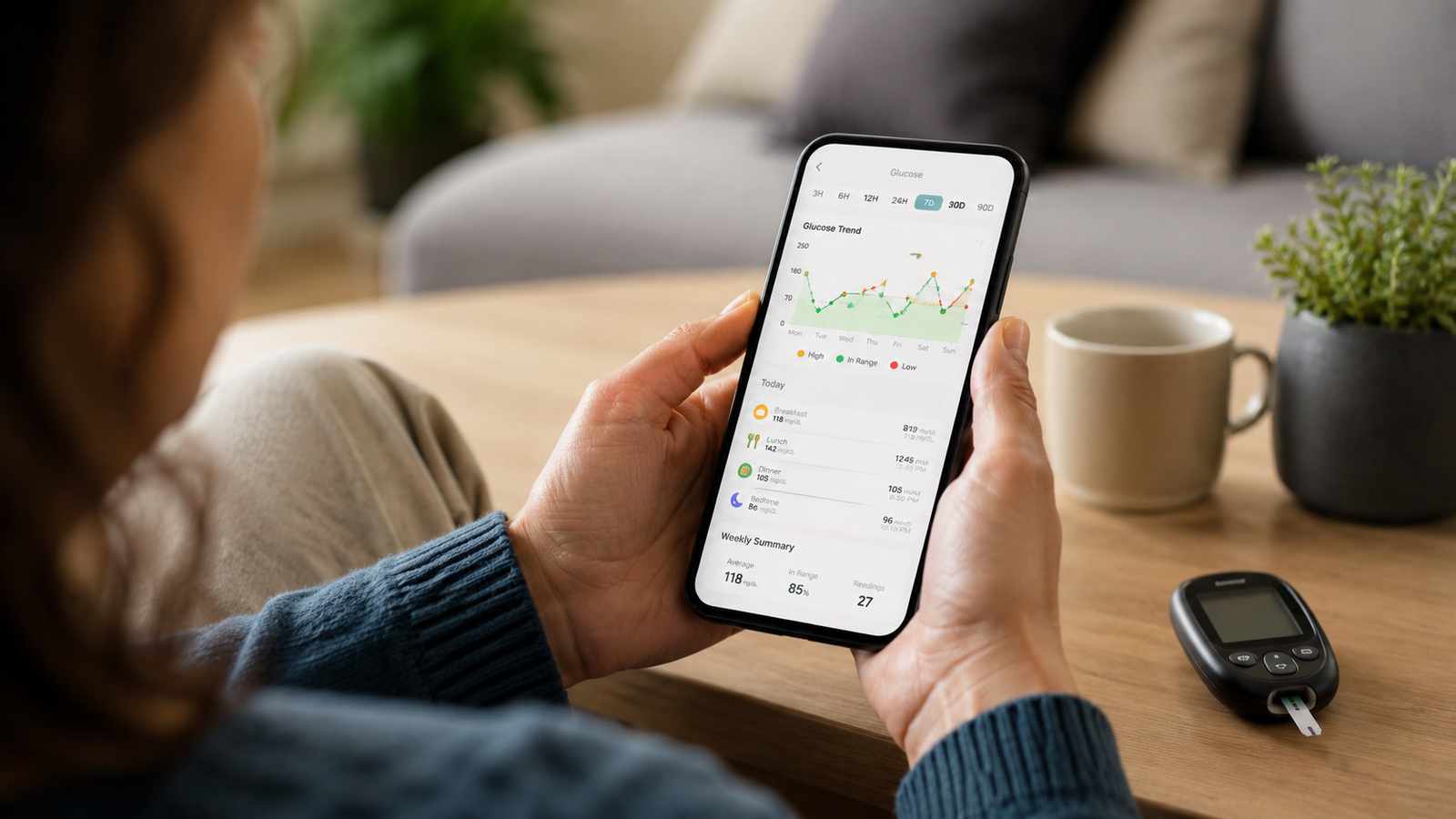
Seeing results keeps you going. When your readings turn into charts and trends you can actually look at, logging stops feeling pointless and starts feeling like it's building toward something. Watching your record grow — and spotting your own patterns — is its own motivation. That visible payoff is a big reason an app sustains the habit better than a notebook you rarely reopen.
5. Connect it to your reason
Consistency is easier when you remember why you're logging in the first place — better appointments, understanding your own body, staying on top of your health. Keeping that reason in mind turns logging from a chore into something purposeful. If you want that motivation spelled out, see why keeping a blood sugar diary is worth it.
| What breaks consistency | What keeps it going |
|---|---|
| Logging feels like a hassle | Fast, low-friction entry |
| Forgetting | Reminders |
| Quitting after a miss | Aiming for consistent, not perfect |
| Feeling pointless | Visible trends and progress |
| Losing motivation | Remembering your reason why |
Build the habit and let it run
Put these together — low friction, reminders, realistic expectations, visible progress, and a clear reason — and logging shifts from something you force to something that runs mostly on its own. That's the goal: a habit durable enough that your log stays complete without constant effort. A tracking app built around these principles makes staying consistent the path of least resistance.
Keep your log going for the long haul
Fast logging, helpful reminders, and trends you can watch build — everything you need to stay consistent and keep your record complete. Free to start.
Frequently asked questions
How do I stay consistent with logging my blood sugar?
Make logging fast and low-friction, use reminders so you don't forget, aim for consistent rather than perfect, keep your progress visible through charts, and stay connected to your reason for tracking. Together these make logging a habit that runs largely on its own.
Why do I keep falling behind on my blood sugar log?
Usually it's friction (logging feels like a hassle), forgetting, or losing motivation after a missed day. Each has a fix: faster entry, reminders, and treating slips as normal rather than a reason to quit. A patchy log usually points to a system problem, not a willpower one.
Is it bad to miss a day of logging?
A single missed day matters far less than your overall consistency. The worst response is to give up because you slipped — just pick back up at the next reading. A log that's mostly complete is genuinely useful; one you abandoned is not.
How can an app help me log more consistently?
An app reduces friction with fast entry, reminds you so you don't forget, and turns your readings into visible trends that make the effort feel worthwhile. Those three things target the main reasons people fall behind, which is why an app usually sustains the habit better than paper.
How long does it take for logging to become a habit?
It varies from person to person, but the key is repetition with low friction and reminders rather than a fixed number of days. Attaching logging to an existing routine and keeping it easy helps it become automatic faster.
What's the most important factor in staying consistent?
Reducing friction. The easier logging is, the more likely you are to keep doing it through busy days and dips in motivation. Pair low friction with reminders and a visible payoff, and consistency largely takes care of itself.
tips to stay consistent logging blood sugarstay consistent blood sugar trackingblood sugar logging habitkeep up blood sugar logconsistent glucose loggingblood sugar tracking motivationlog blood sugar regularlydiabetes logging tips