Pool Pump Vibration: Causes & How to Fix It

Pool Pump Vibration: Causes, What’s Normal, and How to Fix It
A pool pump should hum along with only a faint, steady vibration. When it starts shaking hard, buzzing through the equipment pad, or rattling the plumbing, something has changed — and left alone, that vibration wears out bearings, cracks fittings and shortens the pump’s life. The good news is most causes are easy to identify and fix.
This guide covers what makes a pool pump vibrate, how much is normal, and how to measure it so you can tell whether a fix actually worked. To check your pump’s vibration in seconds, the free Vibration Detector Sensor app reads the level straight from your phone.
Is your pump vibrating more than it should?
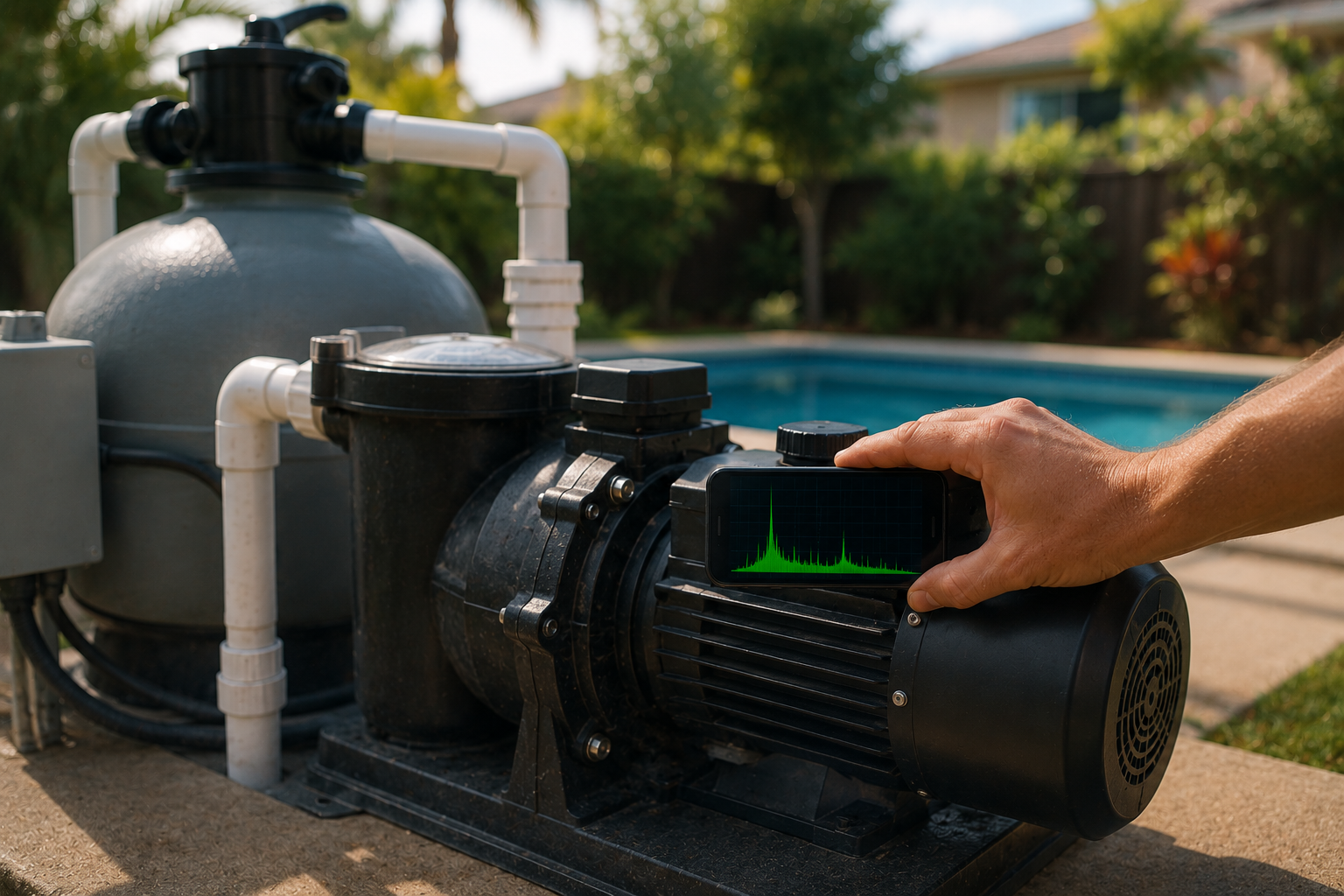
Set your phone on the pump housing and read the live vibration level — then re-check after each fix to see what worked.
Why is my pool pump vibrating?
Pool pump vibration almost always traces back to one of these causes:
| Cause | Tell-tale sign |
|---|---|
| Worn motor bearings | Growling/grinding noise, vibration rising over time |
| Impeller imbalance (debris or wear) | Steady shake, often with reduced flow |
| Cavitation (air or restricted suction) | Crackling, “gravel” sound, surging |
| Loose mounting | Buzzing pad, vibration through plumbing |
By far the most common are worn bearings (an aging pump) and impeller imbalance from debris caught in the basket or impeller. A quick reading with the accelerometer tool before and after clearing the basket will tell you instantly if debris was the issue.
Is some pool pump vibration normal?
Yes — a healthy pump produces a low, constant vibration and a smooth hum. What is not normal is a sudden increase, a new rattle or buzz, or vibration you can feel travelling through the pipework and deck. The key signal is change: if your pump is noticeably more “alive” than it was a month ago, that climb is the warning sign, and it is exactly what a logged reading in the app captures.
How to measure your pool pump’s vibration
Press your phone firmly and flat against the pump’s motor housing while it runs, and read the overall vibration level. Take the reading at the same spot each time, save it, and you have a baseline. From then on, a rising number is your early warning — often weeks before the pump gets loud. The vibration meter also lets you compare directly before and after a repair so you can confirm it helped.
How to fix pool pump vibration
- Clear the baskets and impeller. Debris in the pump or skimmer basket throws off balance and starves the pump — the easiest first fix.
- Address cavitation. Check for air leaks on the suction side, a clogged skimmer, a closed valve or a dirty filter restricting flow.
- Secure the mounting. Tighten the pump to its base and add anti-vibration pads or a rubber mat under the equipment pad.
- Replace worn bearings or the motor. If the pump growls and vibration keeps climbing, the bearings are going — rebuild or replace before it seizes.
✓ Pro tip: Measure, make one change, then measure again. Fixing pool pump vibration is much easier when you can see the number drop — it tells you whether the basket, the mounting or the bearings were really the problem.
Diagnose your pool pump for free
Live vibration readings, before/after comparison and session logging — find the cause and confirm the fix from your phone.
► Get Vibration Detector Sensor on the App Store | Explore the app →
Note: A phone accelerometer is great for screening and comparing pool pump vibration before and after a fix, but persistent vibration or grinding noises warrant inspection by a qualified pool technician.
Frequently Asked Questions
Why is my pool pump vibrating so much?
The most common reasons are worn motor bearings, an unbalanced impeller from trapped debris, cavitation from restricted or air-leaking suction, and loose mounting. A sudden increase in vibration usually points to debris or developing bearing wear.
Is it normal for a pool pump to vibrate?
A faint, steady vibration and a smooth hum are normal. A noticeable increase, a new rattle or buzz, or vibration felt through the plumbing and deck is not normal and should be investigated.
Can a vibrating pool pump be dangerous?
Excessive vibration rarely poses an immediate safety risk, but it accelerates wear on bearings, seals and plumbing, can loosen fittings and cause leaks, and signals a developing fault. It is best fixed promptly to avoid a costly pump failure.
What causes pool pump cavitation?
Cavitation happens when the pump cannot draw enough water, so vapor bubbles form and collapse violently inside it. Common causes are a clogged skimmer or basket, a closed or restricted suction valve, an air leak on the suction line, or an undersized suction pipe.
How do I stop my pool pump from vibrating?
Start by clearing the baskets and impeller, then check for cavitation, secure the pump to its base, and add anti-vibration pads. If it still growls and vibration keeps rising, the bearings are likely worn and the motor needs servicing or replacement.
Can I measure pool pump vibration with my phone?
Yes. Pressing your phone against the pump housing and reading the overall vibration level is an effective way to screen the pump and compare it before and after a repair. Logging the reading over time turns it into an early-warning trend.
pool pump vibrationwhy is my pool pump vibratingpool pump cavitationpool pump noise vibrationfix pool pump vibrationpool pump bearingmeasure pool pump vibrationpool pump mounting