Is Your AC Condenser Vibration Normal? How to Tell

Is Your HVAC Condenser or Compressor Vibration Normal? How to Tell
Every air-conditioning condenser hums and vibrates a little — that is just the compressor and fan doing their job. The question homeowners actually need answered is where the line sits between normal background vibration and a problem that will cost you a compressor. The short version: a steady, moderate hum is fine; a new rattle, a hard shake, or vibration that suddenly got worse is not.
This guide explains how much HVAC vibration is normal, what the common causes of excessive vibration are, and how to measure it yourself. To check your unit’s vibration level, the free Vibration Detector Sensor app gives you a live reading from your phone.
Normal hum or warning sign?
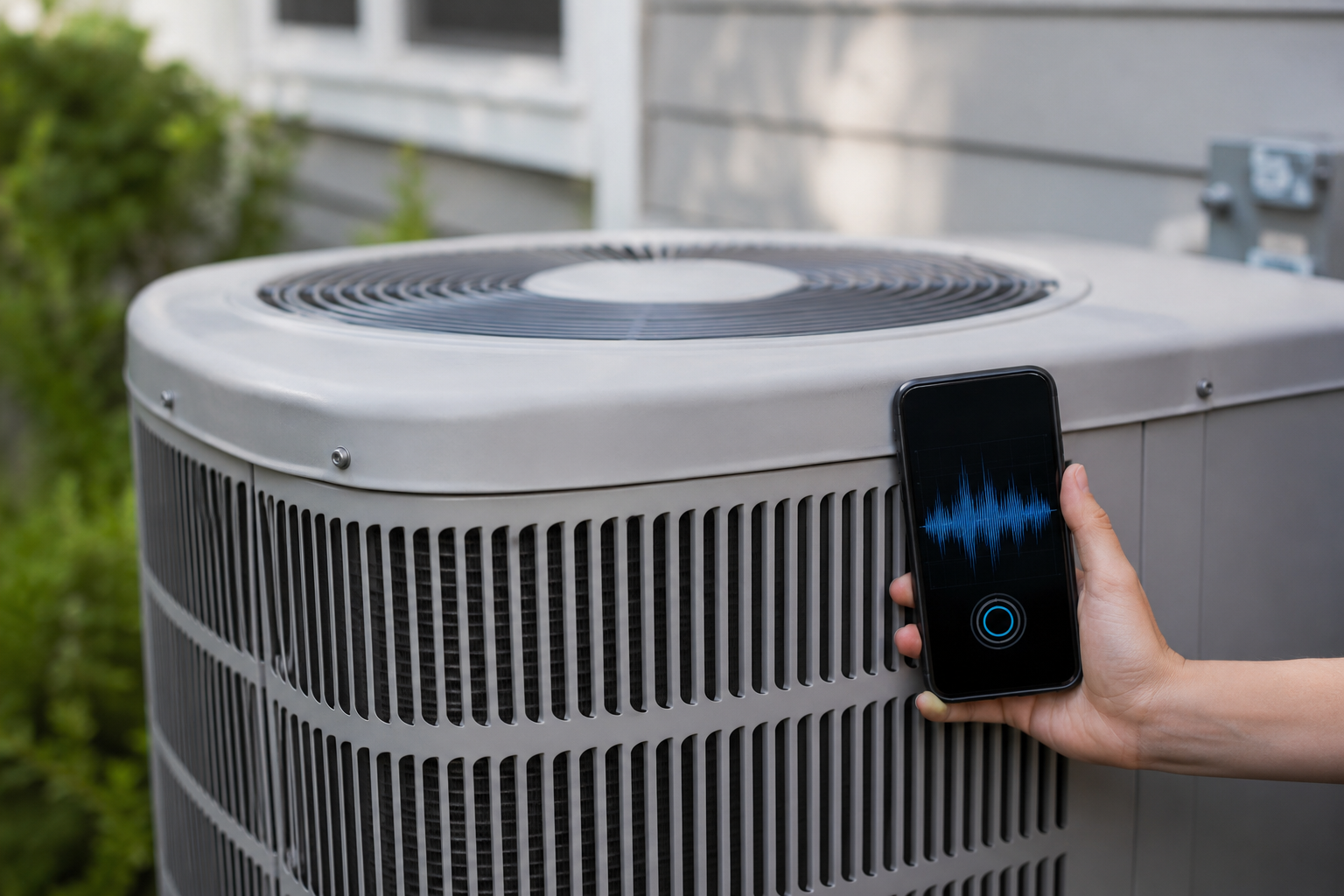
Set your phone on the condenser cabinet and read the vibration level — an objective number beats guessing by feel.
How much HVAC vibration is normal?
A healthy condenser produces a consistent, fairly quiet vibration with a smooth hum. A brief stronger shudder at start-up and shut-down is also normal as the compressor cycles. What signals trouble is a change from how the unit normally runs: a louder buzz, a metallic rattle, a unit that visibly shakes, or vibration you can feel through the wall or ductwork. Establishing a baseline reading with the accelerometer tool while the unit is running well makes any later change obvious.
Common causes of excessive condenser vibration
- Fan blade imbalance. Dirt build-up, a bent blade or debris on the condenser fan throws it out of balance — the most common cause of a buzzy outdoor unit.
- Loose panels and screws. The sheet-metal cabinet rattles when fasteners back out; often the easiest fix.
- Worn fan motor bearings. A growling or grinding undertone with rising vibration.
- A failing compressor. A hard shake, loud hum or banging, especially at start-up, can indicate internal compressor wear or mounting problems.
- Mounting and pad issues. A settled, cracked or unlevel pad lets the whole unit shake.
You can often narrow it down by where the vibration is strongest — check the panels, the fan area and the compressor body separately with the vibration meter.
How to measure your AC unit’s vibration
With the unit running, press your phone firmly against the condenser cabinet, then against the compressor body and near the fan, noting the reading at each. The highest spot points you toward the source. Save a baseline when the unit is healthy, and compare against it whenever something sounds off — a clear rise is your cue to act. The app logs each reading so you can track the unit season to season.
⚠ When to call a pro: A hard, sudden shake or loud banging from the compressor, a burning smell, or a unit that trips its breaker needs a licensed HVAC technician promptly. Compressor and refrigerant work is not a DIY job, and running a failing compressor can destroy it.
How to reduce HVAC vibration
For the DIY-safe causes: tighten the cabinet panels and screws, gently clean debris and dirt from the condenser fan blades (power off first), make sure the pad is level and solid, and fit anti-vibration isolation pads under the unit or rubber grommets on the compressor mounts if they have worn out. Re-measure with the sensor app after each step to confirm the level dropped.
Check your AC unit for free
Live vibration readings, source-finding spot checks and season-to-season logging — know whether that hum is normal, from your phone.
► Get Vibration Detector Sensor on the App Store | Explore the app →
Note: A phone accelerometer is useful for screening and comparing HVAC vibration, but compressor, refrigerant and electrical faults should be diagnosed and repaired by a licensed HVAC technician.
Frequently Asked Questions
Is it normal for an AC condenser to vibrate?
Yes, a steady, moderate vibration and smooth hum are normal, along with a brief stronger shudder at start-up and shut-down. A new rattle, a hard shake, or vibration that has clearly increased is not normal and should be investigated.
Why is my AC compressor vibrating so much?
Excessive compressor vibration can come from worn rubber mounting grommets, internal compressor wear, or refrigerant and pressure issues. A hard shake or loud banging, especially at start-up, suggests a more serious compressor problem that needs a technician.
Can a vibrating AC unit be dangerous?
Strong vibration can loosen refrigerant line connections, crack components and damage the compressor over time. While not usually an immediate hazard, a sudden hard shake, burning smell or tripping breaker should be addressed promptly by a professional.
What does a failing AC compressor feel like?
A failing compressor often produces a hard shake or shudder, loud humming or banging, difficulty starting, and rising vibration over time. It may also trip the breaker. These symptoms warrant a licensed HVAC technician rather than DIY repair.
How do I stop my HVAC unit from vibrating?
Tighten loose cabinet panels and screws, clean debris from the fan blades with the power off, level the pad, and fit anti-vibration isolation pads or replace worn compressor grommets. Measure before and after to confirm each step reduced the vibration.
How can I measure my AC unit’s vibration?
Press your phone against the condenser cabinet, compressor and fan area while the unit runs, and read the overall vibration at each spot. The highest reading indicates the source, and saving a baseline lets you spot any increase over time.
hvac condenser vibrationac compressor vibration normalwhy is my ac unit vibratingcondenser fan imbalanceac vibration causeshvac vibration isolationmeasure ac vibrationfailing ac compressor signs