How to Tell if a Motor Bearing Is Bad (Vibration)

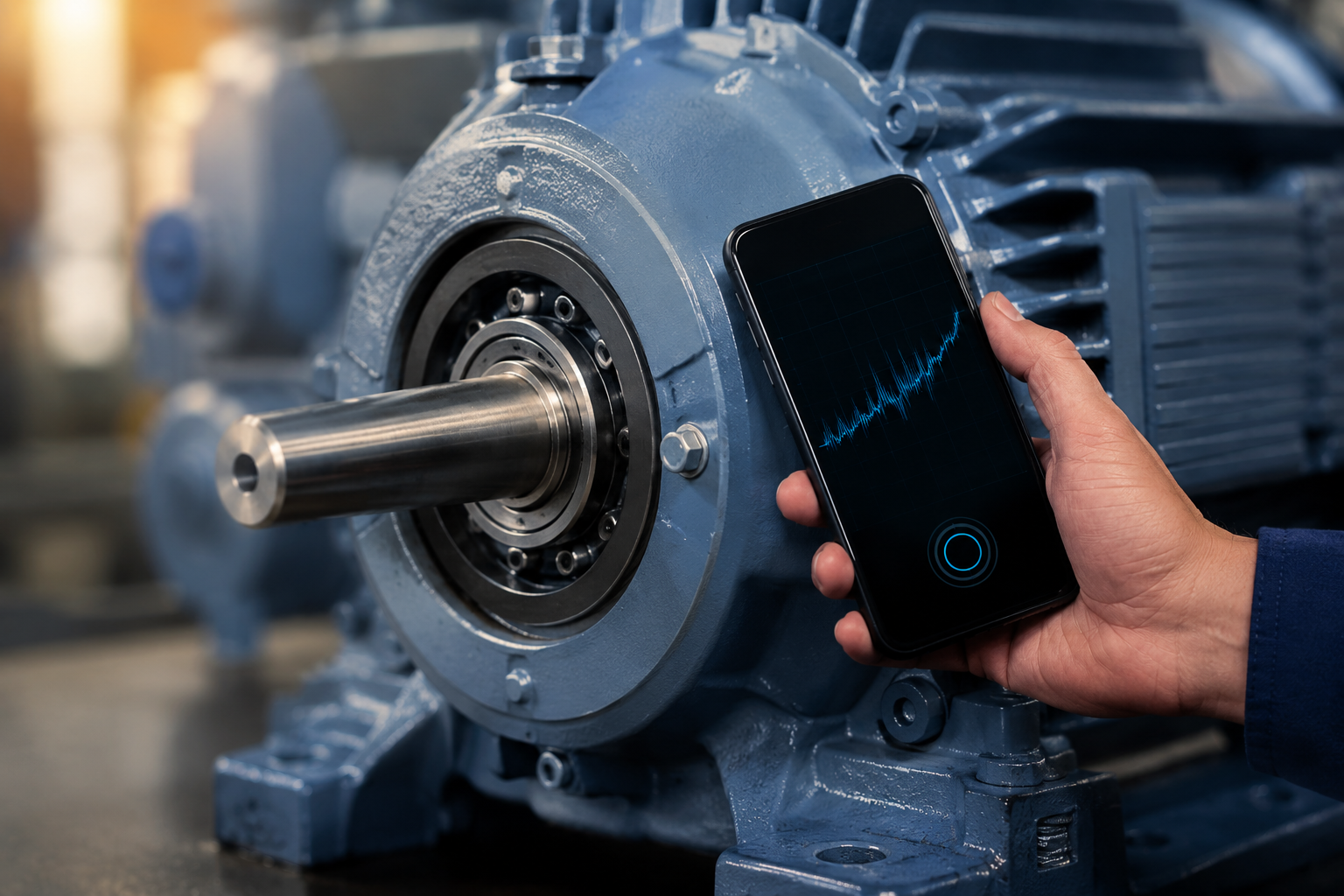
How to Tell if a Motor Bearing Is Bad (Using Vibration)
Bearings are the number-one cause of electric motor failure, and the good news is they almost never fail without warning. Long before a bearing seizes, it gets noisier, runs hotter and — most usefully — its vibration changes in a recognisable way. Learning to read those signs lets you replace a bearing on your schedule instead of in the middle of a breakdown.
This guide covers the symptoms of a failing motor bearing, what bad bearings look like in vibration, and an honest account of what a phone can and cannot detect. To start tracking your motor’s vibration, the free Vibration Detector Sensor app reads the level from your phone.
Catch a failing bearing early
Press your phone to the bearing housing and track the overall vibration — a steady rise from baseline is your early warning.
Signs of a bad motor bearing
A failing bearing usually announces itself through several senses at once:
- Noise — a growling, grinding or rumbling sound, sometimes a high-pitched squeal or whine.
- Heat — the bearing housing runs hotter than usual.
- Vibration — rising overall vibration, often the earliest measurable sign.
- Roughness — with the motor off and unpowered, the shaft may feel rough, notchy or have play when turned by hand.
Any one of these on its own is worth a closer look; together they are a clear signal. A rising reading on the accelerometer tool is often the first to appear, before the noise becomes obvious.
What a bad bearing looks like in vibration
Bearing defects follow a recognisable progression. In the earliest stage, a tiny flaw in the raceway or a ball generates very high-frequency vibration — well above what you can hear or feel. As the damage spreads, that energy grows and spills into lower frequencies, the overall vibration level climbs, and eventually the motor develops broadband “rumble” and audible noise. By the final stage, the looseness and roughness show up even at the running speed. The practical takeaway: a steadily rising overall vibration level is the signal to act, and you can watch for it with the vibration meter.
The honest limit: early bearing faults are high-frequency
Here is the straight truth, because it matters. The earliest bearing-defect signatures live at high frequencies — often hundreds to thousands of hertz — which is beyond the range of a phone’s accelerometer (reliable to about 50 Hz). Detecting a bearing fault at its very first stage is the job of a dedicated analyser using techniques like envelope analysis.
What a phone can do is catch the problem once it has progressed enough to raise the overall vibration level — which is still well before failure, and far earlier than waiting for the bearing to get loud. For routine monitoring, that overall-level trend is genuinely useful, and the app makes it easy to track.
How to check motor bearings with your phone
Combine three quick checks. First, press your phone to the bearing housing and read the overall vibration, comparing it to the motor’s healthy baseline — a clear rise is a warning. Second, listen for any growl or grinding. Third, with the motor safely powered off, carefully feel the housing temperature and turn the shaft by hand to check for roughness. Together, a rising vibration trend plus noise or heat is a confident sign the bearing is on its way out. Log the readings in the sensor app so the trend is unmistakable.
✓ Pro tip: The single most powerful habit is baselining. Record each motor’s vibration when it is healthy. A bearing rarely fails at a fixed number — it fails on a rising trend, and only a baseline lets you see that rise coming.
What to do if a bearing is failing
Once the signs line up, plan the replacement rather than running to failure — a seized bearing can damage the shaft, rotor and housing, turning a cheap fix into a major repair. Schedule downtime, source the correct bearing, and replace it (or have it done) before the vibration reaches the rumble stage. Keep measuring with the vibration meter in the meantime so a sudden acceleration in the trend prompts faster action.
Track bearing health for free
Live RMS & peak vibration, baseline comparison and CSV-export logging — spot a rising trend before a bearing fails.
► Get Vibration Detector Sensor on the App Store | Explore the app →
Note: A phone accelerometer detects bearing problems once they raise the overall vibration level, but earliest-stage, high-frequency bearing diagnostics require a dedicated analyser with envelope analysis.
Frequently Asked Questions
What are the signs of a bad motor bearing?
The main signs are a growling, grinding or squealing noise, a bearing housing that runs hot, rising overall vibration, and a shaft that feels rough or notchy when turned by hand with the motor off. Rising vibration is often the earliest measurable warning.
How does a bad bearing sound and feel?
A bad bearing typically sounds like a low growl or rumble, sometimes with a high-pitched squeal, and the housing feels warmer than normal. With the motor unpowered, turning the shaft by hand may feel rough, gritty or have noticeable play.
Can you detect a bad bearing with vibration?
Yes — vibration is one of the most reliable indicators. Early defects appear as high-frequency vibration, and as the bearing degrades the overall vibration level rises and eventually becomes audible. Tracking the overall level against a baseline reveals the problem developing.
Can a phone detect a bad motor bearing?
A phone can detect a bearing problem once it has progressed enough to raise the overall vibration level, which is still well before failure. It cannot catch the earliest high-frequency defect signatures, which require a dedicated analyser, but it is effective for routine trend monitoring.
How long can a motor run with a bad bearing?
It varies widely — from weeks to months depending on load, speed and how far the damage has progressed. Because a seized bearing can ruin the shaft and rotor, it is best to plan replacement once the vibration trend is clearly rising rather than risk running to failure.
What causes motor bearings to fail?
Common causes include inadequate or excessive lubrication, contamination from dirt or moisture, misalignment, excessive load or vibration, electrical current passing through the bearing, and simple age-related wear. Many of these show up as a rising vibration trend before failure.
how to tell if a motor bearing is badbad motor bearing signsmotor bearing vibrationfailing bearing symptomsdetect bad bearing vibrationmotor bearing noisebearing failure detectionphone bearing check