How to Spot Patterns in Your Blood Sugar Readings

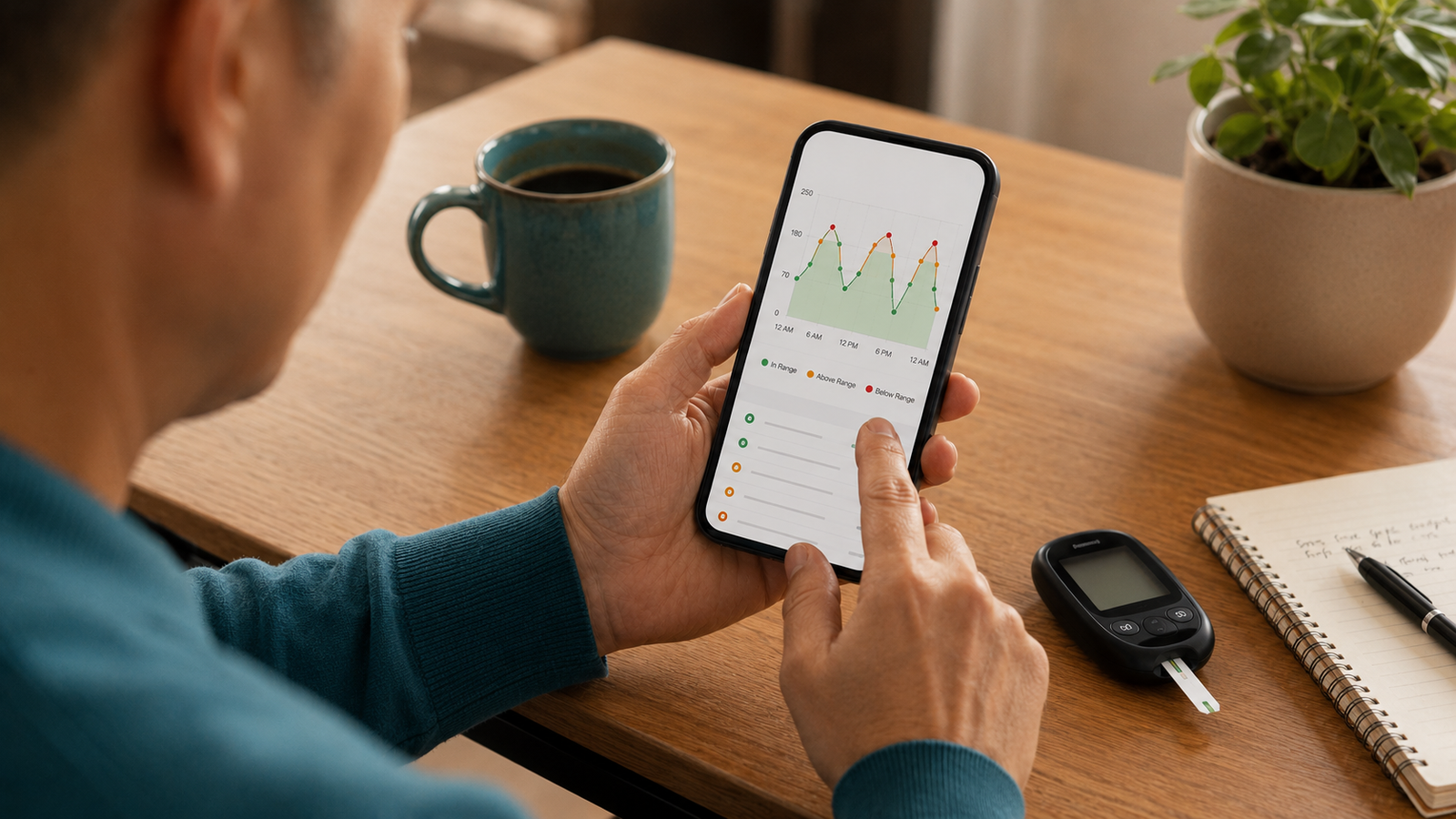
Tracking Blood Sugar Before and After Meals (2026 Guide)
One of the most informative tracking habits is checking your blood sugar before and after a meal — a "paired" reading that shows how that meal affected your level. A single reading can't show movement, but a before-and-after pair captures the change, which is a window into something many people find genuinely useful to observe and discuss with their doctor.
This guide explains what before-and-after-meal tracking is, why people do it, how to track it well, and what it can show you — while being clear that the timing, targets, and any decisions about food or treatment belong with your healthcare provider. Current for 2026.
Medical disclaimer: This article is for general information only and is not medical advice. Blood Sugar Monitor is a tracking tool, not a medical device — it logs the readings you take with your own glucose meter or CGM and does not diagnose or treat any condition. How and when to test around meals, your target ranges, and any changes to your diet or medication are decisions for your qualified healthcare provider.
Capture the before and after
Blood Sugar Monitor lets you log before- and after-meal readings with the meal noted, then see them side by side on charts — making meal-related patterns easy to observe and share with your doctor. Free to start.
What is before-and-after-meal tracking?
It's simply taking one reading before you eat and another a while after, then looking at the two together. The before reading is your starting point; the after reading shows where your level went following the meal. The difference between them is the "movement" a single reading can never reveal. People often call these paired readings, and logging them with the meal noted is what turns them into something you can learn from over time. A tracking app makes pairing and reviewing them straightforward.
Why track blood sugar around meals?
Food is one of the biggest influences on blood sugar, so the period around a meal is where a lot of the interesting movement happens. Tracking before and after lets you observe how different meals or situations compare for you personally — information that's valuable to bring to your doctor or dietitian. The aim here is observation, not self-diagnosis: you're gathering a clearer picture to discuss, not deciding on your own what it means. Keeping those paired readings in a log makes the picture build over time.
How to track before and after meals
The method is simple, with one important caveat about timing:
- Take a reading before the meal and log it, noting what you're about to eat.
- Eat your meal as normal.
- Take a second reading after the meal — commonly a couple of hours after you start eating, though your doctor will tell you the timing that's right for you.
- Log the after reading and tag it so it's clearly paired with the before reading and the meal.
Important: Don't set your own after-meal timing or target numbers from a guide like this. Those are individual to you — ask your healthcare provider how long to wait, what your targets are, and whether before-and-after testing suits your situation.
Logging both readings with the meal noted is what makes them useful later. A logbook app with tags lets you mark "before" and "after" in a tap.
Logging meal readings well
The value is in the context. For each pair, note the meal — even a brief description helps — along with anything else relevant, like activity or how you felt. Over time, this lets you and your doctor see how your readings tend to move around different meals and situations. Keep the logging quick so you'll actually do it every time; an app with quick notes and tags is built for exactly this.
What before-and-after tracking can show you
| Reading | What it captures |
|---|---|
| Before the meal | Your starting point going in |
| After the meal | Where your level went following the meal |
| The pair together | The movement a single reading can't show |
Looked at over many meals, these pairs help you observe how different situations compare for you — but what those comparisons mean, and whether to change anything about your meals or treatment, is a conversation for your doctor or dietitian. Bring your logged pairs to them rather than acting on them alone.
Tracking meals as part of the bigger picture
Before-and-after-meal readings are one of the most useful kinds of pattern you can track, and they fit into the broader habit of watching your numbers over time — see how to spot patterns in your blood sugar for the wider view. Logged consistently and reviewed on charts, your meal pairs become a clear, shareable part of your overall record. You can start capturing them free.
See how meals move your numbers
Log before- and after-meal readings with the meal noted, view them side by side on charts, and export them to share with your doctor. Free to start.
Frequently asked questions
What is before-and-after-meal blood sugar tracking?
It's taking one reading before eating and another a while after, then looking at the pair together. The before reading is your starting point and the after reading shows where your level went, so the pair reveals the movement around the meal that a single reading can't capture.
How long after eating should I check my blood sugar?
It's commonly done a couple of hours after you start eating, but the right timing is individual, so your doctor should tell you how long to wait. Always follow their guidance on after-meal timing and on whether this kind of testing suits your situation.
Why track blood sugar before and after meals?
Food strongly influences blood sugar, so the time around a meal is where a lot of movement happens. Tracking paired readings lets you observe how different meals and situations compare for you — useful information to bring to your doctor or dietitian, rather than to act on by yourself.
How do I log paired meal readings?
Take and log a reading before the meal, noting what you'll eat, then take and log a second reading after the meal, tagging it so it's clearly paired. Recording the meal and any other context with each pair is what makes them meaningful when you review them later. An app with tags makes this quick.
What should I do with what I learn from meal tracking?
Treat it as information to discuss with your doctor or dietitian, not as a basis for changing your diet or medication on your own. They can interpret how your readings move around meals and advise whether anything should change. Your role is to track and observe.
Can a blood sugar app track meals automatically?
An app makes it easy to log before- and after-meal readings, tag them, note the meal, and view them side by side on charts — but you take and enter the readings with your own meter, and your doctor interprets them. The app organizes and displays your paired readings; it doesn't measure or interpret them for you.
how to spot blood sugar patternsblood sugar trendsidentify glucose patternsblood sugar time of day patternsreading blood sugar chartsglucose pattern trackingblood sugar trend appspot diabetes patterns