Delivery Driver Fuel-Saving Tips for Multi-Stop Routes

Delivery Driver Fuel-Saving Tips for Multi-Stop Routes (2026)
For a delivery driver, gas is one of the biggest costs of the job — and it comes straight out of your earnings. The good news is that fuel spend is also one of the most controllable costs you have. And for multi-stop drivers specifically, the single biggest source of wasted fuel isn't your driving style or your tire pressure: it's unnecessary miles from an inefficient route. Fix the miles first, then stack the smaller habits on top.
This guide runs through the fuel-saving tips that actually move the needle for multi-stop delivery work, starting with the ones that save the most. Apply even half of them and you'll feel the difference at the pump every week. Current for 2026.
The biggest fuel saving is fewer miles
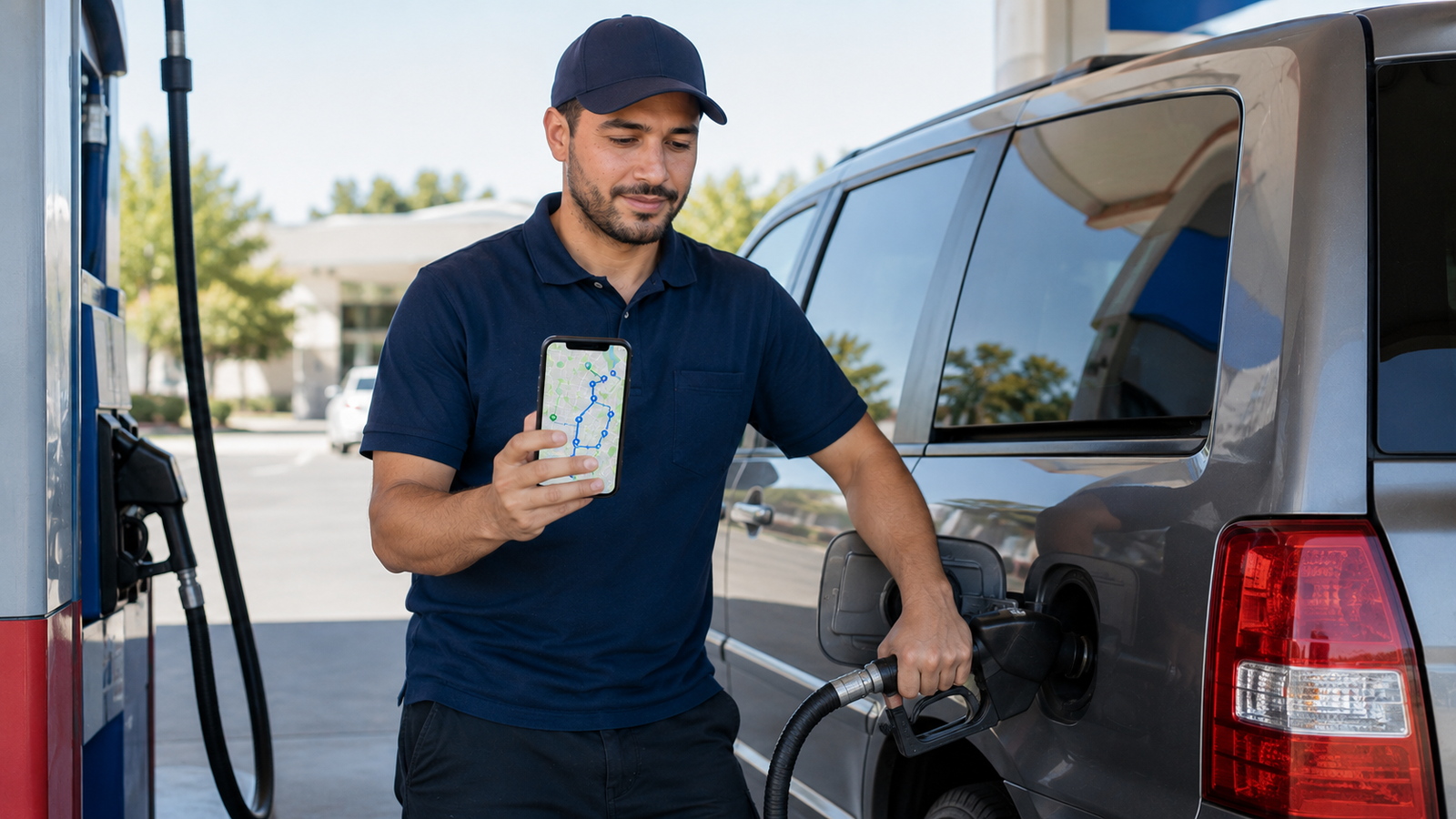
Delivery Route Planner optimizes your route for shortest distance and lets you finish near home — cutting the wasted miles that burn the most gas. Then navigate each stop with Apple Maps, Google Maps, or Waze.
1. Optimize your route for shortest distance
This is the big one. Every unnecessary mile burns fuel, and a poorly sequenced multi-stop route is full of them — backtracking, crossing your own path, driving past stops you'll have to return to. Optimizing your route for shortest distance directly cuts the miles you drive, which directly cuts the gas you burn. No driving technique can compete with simply not driving the extra miles in the first place. A route planner with a shortest-distance mode does this in seconds, and it's the highest-impact change most drivers can make.
2. End your route near home
The default order on most delivery apps has no idea where you live, so it often leaves you finishing far from home — followed by a long, unpaid, fuel-burning drive back. Setting a custom end point so your route finishes near home removes that dead mileage entirely. Over a week of routes, eliminating that drive home saves a meaningful amount of gas. It's one tap in a good planner.
3. Eliminate backtracking
Even within a route, doubling back to a neighborhood you already left wastes fuel twice over. Cluster nearby stops together and drive in logical loops rather than zig-zags. This is really a sub-point of optimization — a route optimizer handles it automatically — but it's worth keeping in mind even when you sequence stops yourself.
4. Cut down on idling
An idling engine gets zero miles per gallon. Those minutes spent parked with the engine running — waiting at a gate, filling out a delivery note, sitting between close stops — quietly drink fuel. Switch off when you're stopped for more than a minute or so, and you'll claw back gas you didn't realize you were losing.
5. Drive smoothly
Hard acceleration and sharp braking are fuel killers. Anticipate the road ahead, accelerate gently, and coast toward stops instead of racing to them and slamming the brakes. Smooth, steady driving can noticeably improve your fuel economy, especially in the stop-and-go conditions multi-stop routes are full of.
6. Keep your tires properly inflated
Under-inflated tires create more rolling resistance, which makes your engine work harder and burn more fuel. Check your tire pressure regularly against the recommended level — it's free, takes minutes, and pays you back in better mileage and longer tire life.
7. Lighten the load where you can
Extra weight means extra fuel. While you obviously have to carry your packages, you don't need to haul around unnecessary gear, junk, or a tank that's always brimming full. Keep the vehicle reasonably clear of dead weight you're not using that day.
8. Stay on top of maintenance
A well-maintained vehicle is an efficient one. Fresh oil, a clean air filter, and a healthy engine all contribute to better fuel economy. Skipping maintenance to save money often costs you more at the pump than you saved.
9. Use climate control wisely
Both air conditioning and heating draw on the engine. Use them when you need to — comfort and safety matter — but be mindful that blasting the AC all day adds up. At lower speeds, cracking a window can be enough; at higher speeds, AC is usually the more efficient choice.
10. Plan smarter fuel stops
Prices vary station to station, and detouring far for cheap gas can cancel out the savings. Plan to refuel at conveniently located, reasonably priced stations along your route rather than driving out of your way. Combined with an optimized route from your planner, your fuel stops fit naturally into your day.
Fuel-saving tips at a glance
| Tip | Why it saves fuel |
|---|---|
| Optimize for shortest distance | Fewer total miles driven |
| Finish near home | No long drive back |
| Cut idling | Idling burns fuel for zero distance |
| Drive smoothly | Hard accel/braking wastes gas |
| Proper tire pressure | Less rolling resistance |
| Lighten the load | Less weight to move |
Notice the top two are both about miles — because for multi-stop drivers, distance is where the real fuel money is won or lost. Nail your routing and you've captured the biggest savings before you've changed a single driving habit. You can start with the routing free.
Bottom line: You can do everything right behind the wheel and still bleed money if your route is full of wasted miles. Optimize the route first — for shortest distance, finishing near home — then layer the driving and maintenance habits on top for the full effect.
Burn less gas, keep more pay
Optimize your route for shortest distance, finish near home, and cut the wasted miles that drain your fuel budget. Then navigate every stop with Apple Maps, Google Maps, or Waze.
Frequently asked questions
What's the best way for a delivery driver to save fuel?
The biggest saving comes from driving fewer miles, so optimizing your multi-stop route for shortest distance and finishing near home matters more than any single driving habit. After that, cutting idling, driving smoothly, keeping tires inflated, and maintaining your vehicle all add further savings.
Does route optimization really save gas?
Yes — significantly. A poorly sequenced route adds backtracking and wasted miles, and every extra mile burns fuel. Optimizing for shortest distance removes those miles directly, which is why it's the highest-impact fuel-saving change a multi-stop driver can make.
How much fuel does idling waste?
An idling engine produces zero miles per gallon, so every minute spent parked with the engine running is pure waste. Across a day of stops, gates, and waits, that adds up. Switching off when stopped for more than about a minute recovers fuel you'd otherwise lose.
Does finishing my route near home save gas?
Yes. When your route ends far from home, you pay for the fuel and time of the drive back yourself. Setting a custom end point so your last stop is near home removes that dead mileage, which adds up to real savings over a week of routes.
Do tire pressure and weight really affect fuel economy?
They do. Under-inflated tires increase rolling resistance and make the engine work harder, while extra weight requires more fuel to move. Keeping tires at the recommended pressure and clearing unnecessary weight are easy, free ways to improve mileage.
Should I turn off the AC to save fuel?
Climate control draws on the engine, so heavy AC use adds to fuel consumption. Use it for comfort and safety, but be mindful. At low speeds, opening a window can be enough; at higher speeds, AC is generally more efficient than the drag from open windows.
delivery driver gas saving tipsfuel saving tips multi stophow to save gas delivery driverreduce fuel costs deliverysave money on gas couriermulti stop route fuel efficiencydelivery driver fuel economycut gas costs driving