Color Temperature for Video and Interview Lighting

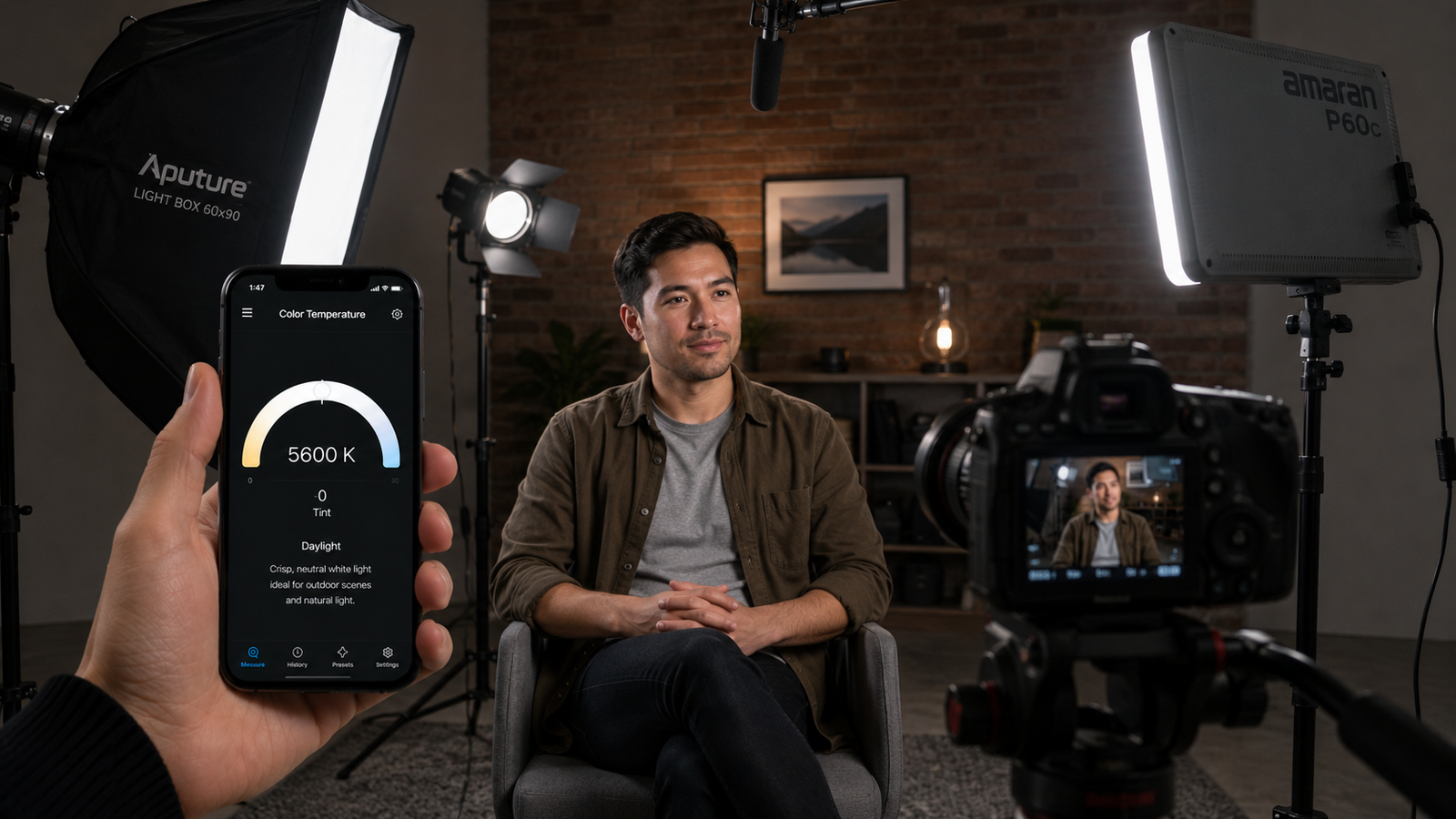
Color Temperature for Video and Interview Lighting
Color temperature matters even more in video than in stills. A single photo with a slight cast is easy to fix; an interview where the white balance drifts between shots, or where your key and fill lights don't match, is a headache that follows you all the way into the edit. Getting color temperature right on set — consistent, matched, and deliberate — is what separates footage that cuts together cleanly from footage that fights you.
This guide covers the color temperatures to use for video and interview lighting, why matching your sources is critical, and how to keep everything consistent across a shoot. To dial it in accurately, you can measure each light's color temperature with your phone.
📲 Match every light on set
Kelvin Light Scale reads the color temperature and tint of each source from your iPhone, so your key, fill, and background lights all agree.
Why color temperature is critical in video
Video is a sequence of frames, so any inconsistency becomes motion you can see. Two problems dominate: lights that don't match each other (a warm key against a cool fill makes a face look two-toned) and white balance that shifts during recording. Unlike a photo, you can't simply re-balance one frame — a drift runs through the whole clip. Setting a single, matched color temperature and locking white balance solves both, and it starts with knowing each light's actual value, which you can measure directly.
Common color temperatures for video
Two standards anchor most video lighting: tungsten and daylight. Modern LED panels are often adjustable across the range, which is convenient — but only if you set them all to the same value.
| Setup / source | Color temperature | Feel |
|---|---|---|
| Tungsten / warm interior look | 3,200K | Warm, intimate, classic |
| Neutral studio | 4,000–4,300K | Balanced, natural |
| Daylight / matching windows | 5,600K | Crisp, clean, modern |
For an interview, pick one standard and set every light to it. If you measure your panels and find one is off, you can correct it before rolling.
Interview lighting: the basics
A standard interview uses a few lights working together — commonly a key (the main light on the subject), a fill (softening shadows on the opposite side), and often a back or hair light to separate the subject from the background. The single most important color rule is that your key and fill must share the same color temperature. If they don't, one side of the face goes warm and the other cool, which looks unnatural and is hard to fix. Measuring both with a quick reading confirms they agree before you commit.
Matching your lights
Even LED panels of the same brand and model can drift slightly from their labeled value, and different models rarely match exactly. The professional habit is to measure each fixture and trim it — via the panel's Kelvin control or with a correction gel — until they all read the same. This is especially important when mixing fixtures from different makers or ages. A few seconds with a meter per light prevents hours of color-matching in post, and you can check each one as you set up.
💡 Pro tip
Watch the tint, not just the Kelvin. Two LED panels can both read “5,600K” yet differ on the green–magenta axis, leaving one slightly green. Match the tint (Duv) as well as the color temperature for a truly seamless look across all your lights.
Dealing with mixed light and windows
Shooting an interview near a window means daylight (around 5,600K) mixing with your fixtures. You have two clean options: set your lights to daylight (5,600K) so they match the window, or gel the window down toward tungsten and set everything warm. What you want to avoid is leaving a warm 3,200K key fighting cool daylight on the same face. Measuring both the window and your lights tells you how far apart they are and which way to bring them together — you can measure each source and plan the match.
Lock your white balance
Once your lights are matched, set a manual white balance to that color temperature and lock it. Never leave a camera on auto white balance for an interview — it will hunt and shift as the subject moves or the framing changes, producing visible color drift across the clip. A locked, measured white balance keeps every second consistent. Capture the value with a reading and enter it before you record.
✅ The verdict
Pick one color temperature (3,200K tungsten or 5,600K daylight are the standards), set and measure every light to match it on both Kelvin and tint, then lock a manual white balance to that value. Consistency and matching are everything in video.
Great interview color isn't complicated — it's disciplined. Choose a temperature, make every light agree, lock your white balance, and your footage cuts together cleanly with no surprises in the edit. Start by measuring your lights — you can check them now.
Keep your video color consistent
Kelvin Light Scale reads color temperature, tint, lux, and exposure from your iPhone — match every light and lock your white balance with confidence. Free to start, with pro metrics when you want them.
Frequently asked questions
What color temperature should I use for video?
The two standards are 3,200K (tungsten, warm) and 5,600K (daylight, crisp), with many shooters using a neutral 4,000–4,300K for a natural look. The most important thing is to pick one value and set every light and the camera to match it.
What's the best color temperature for an interview?
There's no single “best” — tungsten 3,200K gives a warm, intimate feel while daylight 5,600K looks crisp and modern. Choose based on your mood and any existing light (like windows), then make all your fixtures and your white balance match it.
Do my key and fill lights need the same color temperature?
Yes. If the key and fill differ in color temperature, one side of the subject's face goes warm and the other cool, which looks unnatural and is hard to correct. Match both lights on Kelvin and tint.
Should I use auto white balance for video?
No. Auto white balance can drift as the subject or framing changes, causing visible color shifts across a clip. Set a manual white balance to your lights' measured color temperature and lock it for consistent color throughout.
How do I match LED panels that should be the same?
Measure each panel, since even identical models can drift, then trim them with their Kelvin control or correction gels until they all read the same color temperature and tint. Measuring on set prevents tedious color-matching in post.
How do I handle a window in an interview shot?
Either set your lights to daylight (around 5,600K) to match the window, or gel the window toward tungsten and keep your lights warm. Avoid mixing a warm key with cool daylight on the same subject. Measuring both sources shows you how to bring them together.
color temperature for videointerview lighting color temperaturevideo white balance settings3200k vs 5600k videomatching led panels colorkey and fill light matchinglock white balance videointerview lighting setup