Best App to Track Blood Sugar and Blood Pressure 2026

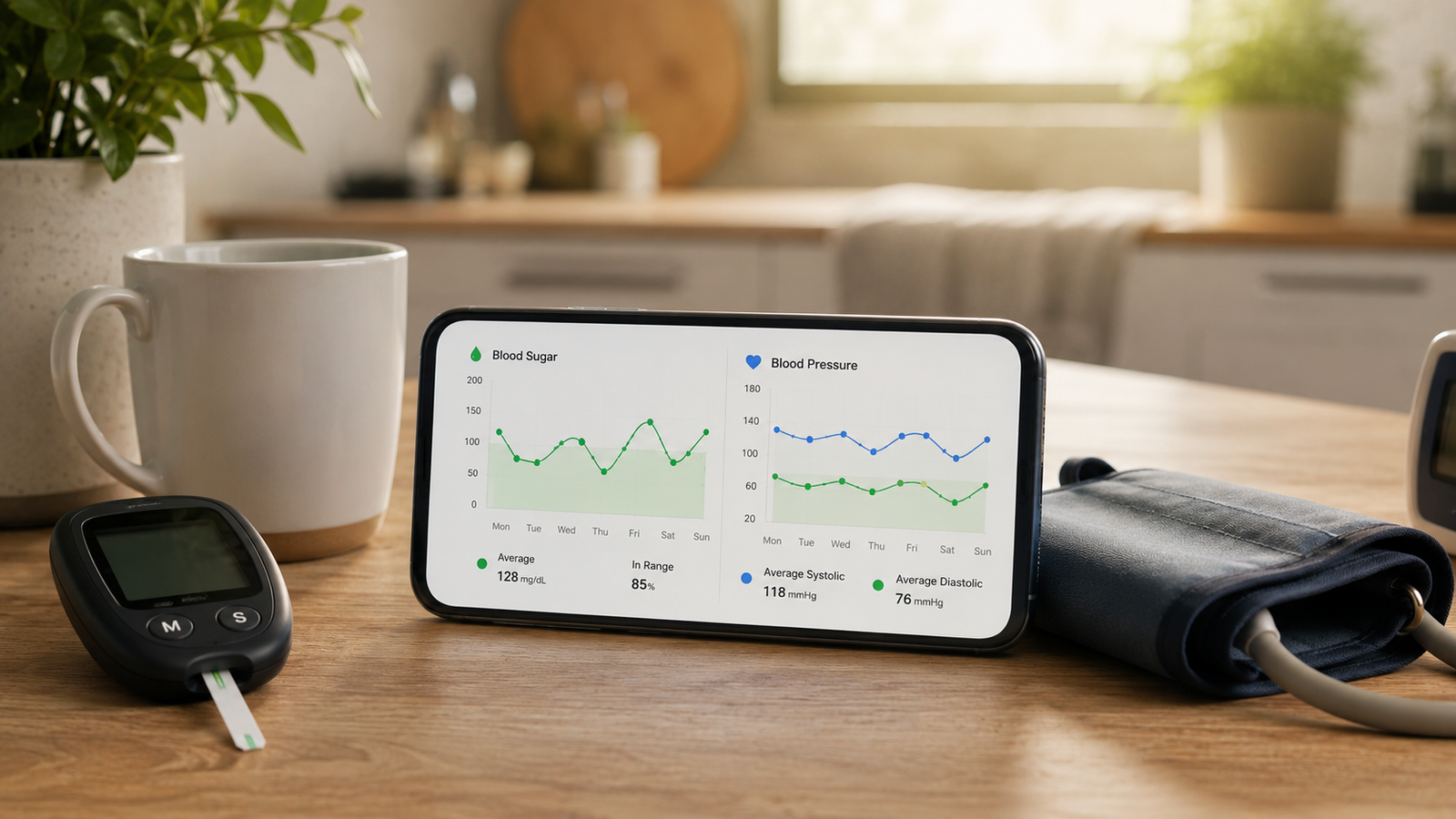
The Best App to Track Blood Sugar and Blood Pressure Together (2026)
If you're keeping an eye on your blood sugar, there's a good chance you've been asked to watch your blood pressure too — the two are commonly monitored together as part of looking after your overall health. The problem is that most tracking apps do one or the other, leaving you juggling two separate apps, entering data twice, and never seeing the full picture in one place. The better answer is a single app that tracks both.
This guide explains why blood sugar and blood pressure are so often tracked side by side, the headache of using two separate apps, what to look for in a combined tracker, and how an all-in-one health log keeps everything together. Current for 2026.
Medical disclaimer: This article is for general information only and is not medical advice. Blood Sugar Monitor is a tracking tool, not a medical device — it logs the readings you take with your own glucose meter, blood pressure cuff, or other devices, and does not diagnose or treat any condition. Always follow the guidance of your qualified healthcare provider.
Both numbers, one app
Blood Sugar Monitor tracks blood sugar and blood pressure together — plus insulin, weight, A1c, and cholesterol — with charts, target ranges, reminders, and reports you can share with your doctor. Free to start.
Why track blood sugar and blood pressure together?
Blood sugar and blood pressure are two of the most common numbers people are asked to keep tabs on, and they're frequently watched together as part of managing overall health. Many people who monitor their glucose are also advised by their doctor to track their blood pressure, so it's natural to want both in one record rather than two. Keeping them side by side means that when you sit down with your care team, the whole picture is in front of you at once. Exactly what to track, and how often, is something to confirm with your own provider — but a single app that handles both makes following that guidance far easier.
The trouble with two separate apps
Using one app for glucose and another for blood pressure seems fine until you actually live with it. The friction adds up fast:
- Fragmented data. Your health story is split across two places, so you never see it as one picture.
- Double the effort. Two apps to open, two routines to remember, two sets of reminders.
- Harder to share. When your doctor wants to see your numbers, you're exporting from two apps and stitching them together.
- No combined view. You can't easily look at both readings on the same day, side by side.
Consolidating into one app removes all of that. Everything you log lives on a single timeline, ready to review or export as one report.
What to look for in a combined tracker
When choosing an app to handle both, the features that matter most are:
- Easy logging for both. Recording a glucose reading and a blood pressure reading should each take just seconds.
- Charts with target ranges for each. Both metrics plotted against your target zones so patterns are visible at a glance.
- One shared timeline. The ability to see what happened across all your metrics on the same day.
- Reminders for each. Separate nudges so you keep both records complete.
- A combined export. One report covering everything, to share with your doctor.
- Privacy and offline use. Sensitive health data kept on your device, syncing only when you choose.
An app that covers these turns two chores into one simple habit. You can check this one against that list yourself.
Two separate apps vs one combined app
| Aspect | Two separate apps | One combined app |
|---|---|---|
| Daily logging | Two apps, two routines | One place for both |
| Seeing the full picture | Split across apps | One shared timeline |
| Reminders | Managed separately | All in one app |
| Sharing with a doctor | Two exports to combine | One combined report |
| Other metrics | More apps still | Weight, A1c, cholesterol too |
For anyone tracking more than one number, the combined approach is simply less work and a clearer view. That's the whole idea behind an all-in-one health log.
How an all-in-one app works
The flow is the same simple loop for every metric:
- Take your reading — glucose with your meter or CGM, blood pressure with your cuff.
- Log it in the app, adding any context like time of day, medication, or a note.
- Review your trends on charts that plot each metric against its target range.
- Export one report covering everything, to share with your doctor.
Because it's all one app, logging your blood pressure right after your glucose is effortless, and your full history stays together. You can set it up free.
Beyond the two big numbers
The strongest combined trackers go past glucose and blood pressure to cover the rest of your metabolic picture — insulin, weight, A1c, and cholesterol — so everything you and your doctor might want to review lives in a single record. If you're managing several numbers, that breadth is the difference between one tidy log and a phone full of half-used health apps. A genuine all-in-one tracker keeps it all in one place.
Track both numbers in one place
Log blood sugar and blood pressure together — plus insulin, weight, A1c, and cholesterol — see your trends against target ranges, set reminders, and export one report for your doctor. Free to start.
Frequently asked questions
What's the best app to track blood sugar and blood pressure together?
The best option is an all-in-one app that logs both metrics easily, charts each against its target range on one shared timeline, sends reminders for both, and exports a single combined report for your doctor. Tracking both in one place beats juggling two separate apps. The right one for you is whichever checks the boxes that match how you manage your health.
Why do people track blood sugar and blood pressure at the same time?
Both are commonly monitored together as part of looking after overall health, and many people who track their glucose are also advised by their doctor to keep an eye on their blood pressure. Keeping both in one record makes it easier to follow that guidance and to share a complete picture at appointments. What to track and how often is best confirmed with your provider.
Can one app really track both blood sugar and blood pressure?
Yes. An all-in-one health tracker lets you log glucose and blood pressure — and often weight, insulin, A1c, and cholesterol — in a single app, each with its own charts and target ranges, so your whole picture stays together instead of being split across multiple apps.
Does the app measure my blood pressure or blood sugar?
No. The app records the readings you take with your own devices — a glucose meter or CGM for blood sugar and a blood pressure cuff for blood pressure. It organizes, charts, and shares those readings but does not measure them itself, so your devices are still essential.
Is it better to use one combined app or two separate ones?
For most people tracking more than one number, a single combined app is less work and clearer — one routine, one set of reminders, one shared timeline, and one report to share. Two separate apps fragment your data and double the effort of logging and sharing.
Can I share both my blood sugar and blood pressure with my doctor?
Yes. A combined tracker lets you export one report covering both metrics over the date range you choose, so you can print it, email it, or show it at your appointment — instead of exporting from two different apps and piecing them together.
best app to track blood sugar and blood pressureblood sugar and blood pressure tracker appapp to log glucose and blood pressureall in one health tracker apptrack glucose and blood pressure togetherdiabetes and blood pressure appcombined health log appblood pressure and glucose log